14,000 results,
0 suggestions
When restaurant comparators provide listings rather than suggestions
6-MINUTE READ
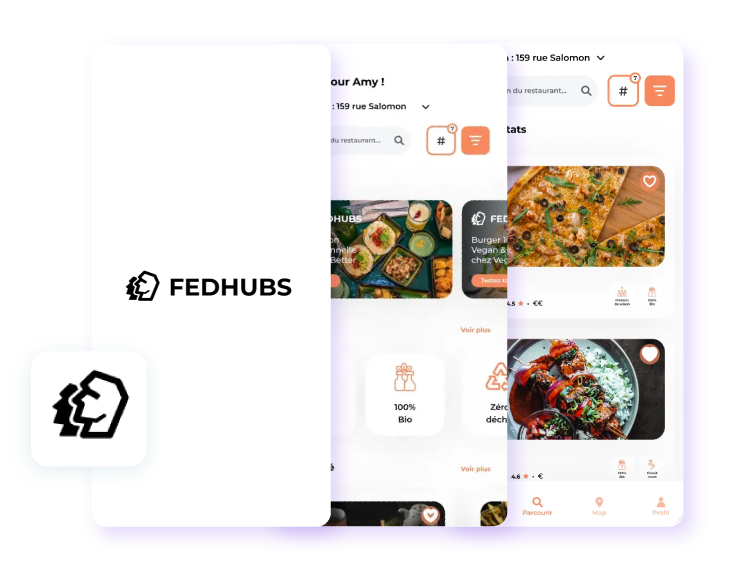
CONTEXT & OBJECTIVES
Identifying business opportunities to reshape FEDHUBS’ product strategy.
DISCOVERY SUMMARY
THE DISCOVERY ABOUT USERS
People are looking for ideas and recommendations rather than pinpointing THE ideal restaurant. Their preferences are often vague and they rely heavily on the restaurants’ look and feel to guide their choices.
They turn to restaurant comparator tools the same way they would consult a friend for suggestions:
“Do you have any recommendations for restaurants where I could enjoy a good time?”
THE PROBLEM
However, restaurant comparator apps provide restaurant directories rather than recommendations.
People are dealing with extensive restaurant lists up to 14313 results in areas like Paris.
And this ocean of information and choices feels rather overwhelming and time-consuming than helpful.
THE OPPORTUNITY
The opportunity is here for FEDHUBS to create a platform that goes beyond providing lists of restaurants’ data, but rather inspire people in their dining choices:
An inspiration hub to spark creativity and exploration of new and exciting dining experiences.
The go-to platform to discover the next restaurants to try.
User research strategy
Exploring the market and uncovering user insights

WHAT WE AIM TO ANSWER
. Why do people go to restaurants?
. What criteria do people consider when choosing a restaurant?
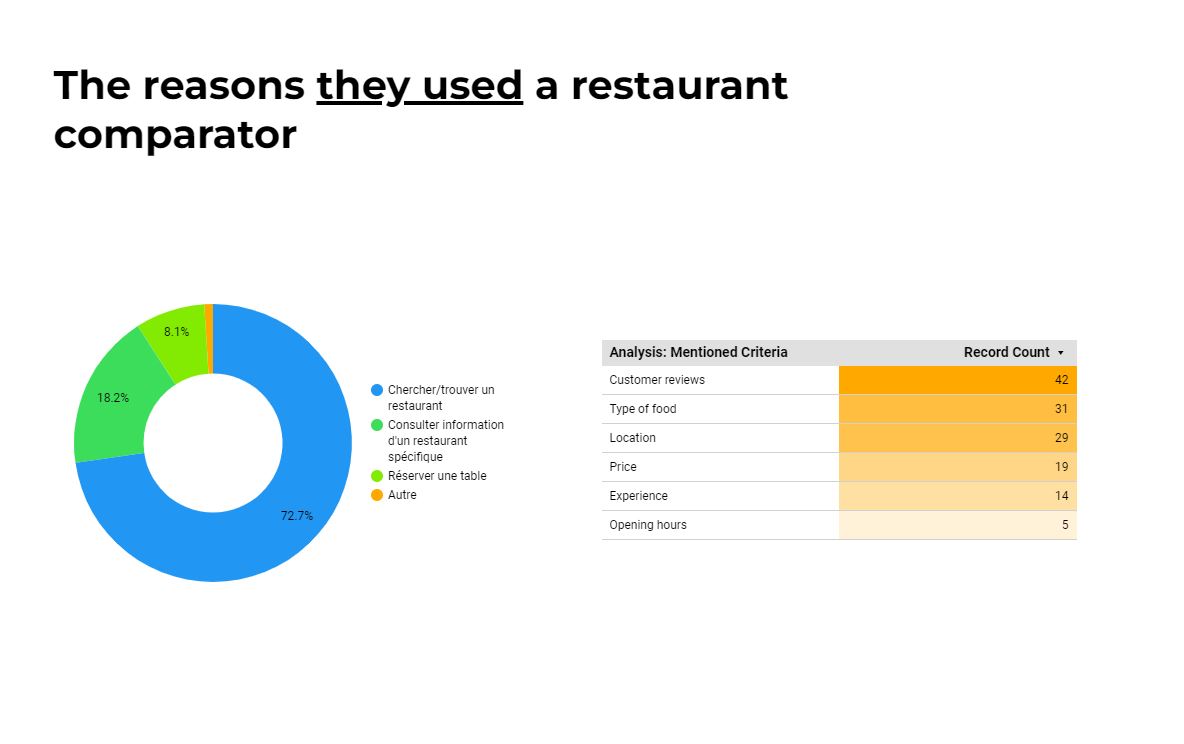
. Why do people use restaurant comparators?
. What motivates people to use a comparator app rather than another?
. What usability issues do people face when using a restaurant comparator?
Feature specific questions:
. Loyalty: Why do people go back to a restaurant?
. Diets and food allergies: How do diets and allergies impact people’s choice of restaurant?
. Groups: What criteria do groups of people consider when choosing a restaurant?
DATA COLLECTION METHODS
Secondary research
. Market research
. Competitors’ analytics
. Existing studies
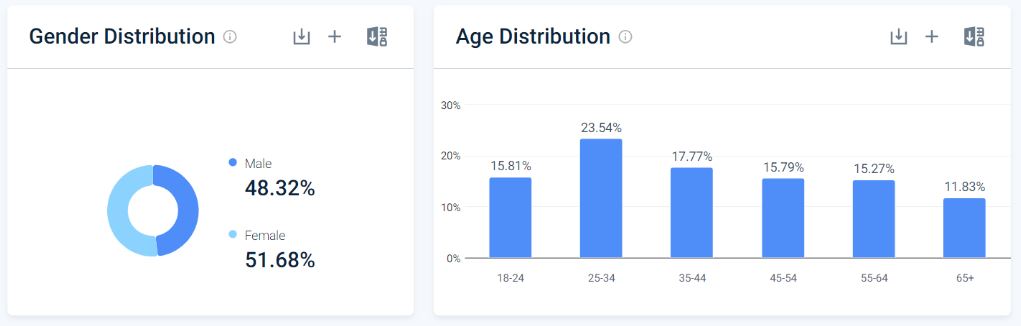
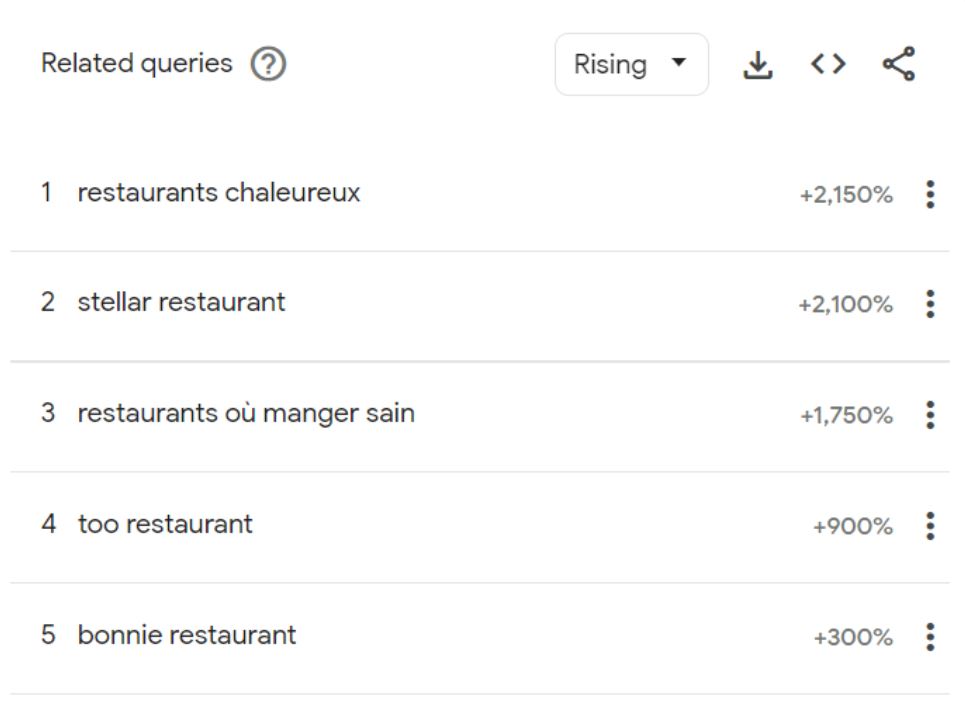
. Google search analytics
Primary research
. 5 In-depth user interviews
. 5 User testings on competitors’ apps
. 1 Online survey (127 respondents)
. 1 Restaurant owner interview
OUR TARGET AUDIENCE
FEDHUBS is targeting the French market. The app will be launched in Paris before a potential extension to the rest of France.
Our target users:
. Active individuals aged 25- 35
. Living in France
. Customers of independent restaurants


SECONDARY RESEARCH
Tools
Google trends
Statistica
Webtraffic
Objectives
. to better understand the market
. to identify main competitors
. to understand competitors’ strategy and strengths
. to pinpoint trends in search behaviours
. to gain insights into “first layer” user needs
. to gain understanding of “first level” search behaviours
IN-DEPTH USER INTERVIEWS
. 5 Users: 3 from Paris, 2 from outside of Paris.
. Regularly going to restaurants
. Have been to a restaurant in the past week
. Have used an online restaurant comparator
OBJECTIVES
. To explore dining out habits, goals, and contexts
. To understand factors influencing restaurant choices
. To gain insights into motivations and context of using comparator apps
. To investigate user beliefs, thoughts and habits regarding comparator apps
FOCUS
. Dining out habits
. Latest dining out experience
. Use of restaurant comparators
. Restaurant discovery habits
USER TESTINGS
. 5 User-participants: 3 from Paris, 2 from outside of Paris.
. Tests on 2 competitors’ apps
. Have been in the restaurant in the past week
. Have used a restaurant comparator app
OBJECTIVES
. To identify restaurant search behaviours
. To understand expectations, needs and goals when using restaurant comparators
. To identify usability issues on restaurant comparators
FOCUS
. Online restaurant search journey
. Online restaurant reservation journey

ONLINE SURVEY
. 12 questions
. 127 respondents
. 8 open-ended questions, 4 closed-ended questions
OBJECTIVES
. To gain a broader understanding of people’s goals and context of use with restaurant comparators
. To identify usability issues on restaurant comparators at a broader scale
. To further explore people’s dining-out experiences and habits
FOCUS
. Last use of a restaurant comparator
. Dining out habits
. Latest dining out experience
. Restaurant discovery
EXPERT INTERVIEW
. Interview of an independent restaurant owner based in Paris
OBJECTIVES
. To gain insights into the needs and challenges within the restaurant industry
. To comprehend the impact of restaurant comparators on restaurant businesses
INSIGHTS
. Restaurants main challenge is to gain visibility in a highly competitive industry.
. Customer reviews significantly impact a restaurant’s success.
. Restaurants face a challenging post-covid situation that puts their survival at risk.
Research outcomes
Articulating findings and identifying business opportunities

ANALYSIS METHODS
. Affinity diagramm
. Personas
. “As-is” Customer Journey Map
OUR USERS


KEY FINDINGS
A SEARCH ENGINE FOR INSPIRATION
THE restaurant they want to go to.
=> Restaurants they could go to.
People are not looking for THE ideal restaurant. They are looking for ideas of places they could go to, now or in the future.
14000 RESULTS, 0 SUGGESTION
Data is valued over information.
Restaurant comparator apps offer detailed restaurant listings to scroll through without providing guidance. People feel lost and overwhelmed in this ocean of data.
I DON'T KNOW WHAT I WANT, UNTIL I FIND IT.
Filters become a tool for criteria inspiration.
People embark on their restaurant search journey with about 2 or less clear criteria in mind.
They are open to exploring various options.
Filters become a tool for criteria inspiration rather than criteria choice that people use to reduce the overwhelming list of results offered by comparators.
Identifying Opportunities
People don’t just want a restaurant finder tool; they aspire to an inspiration hub for their dining experiences.
FEDHUBS stands at the forefront of a transformative opportunity to create a platform that inspires people in their dining experiences. More than just a tool to find a restaurant: an inspiration hub for exploring dining ideas. The go-to platform to discover the next restaurants to try.

“Marianne brought a unique blend of creativity, empathy, and strategic thinking to our start-up. Her ability to empathise with users, challenge assumptions, and think outside the box greatly influenced our product.
Marianne’s collaborative mindset, effective communication, and dedication to user-centric design have significantly influenced our product development journey.”