Airline booking odyssey
When the real journey is about finding flight information
7-MINUTE READ

CONTEXT & OBJECTIVES
Identifying business opportunities to design EanAir’s airline booking app strategy.
We want to understand people’s goals, behaviours and experience on Airline booking apps to identify potential business opportunities and shape EANAIR’s product strategy.
DISCOVERY SUMMARY
THE DISCOVERY ABOUT USERS
People are seeking information rather than an immediate flight ticket.
They carefully assess the true value behind each price and are willing to invest considerable time exploring and comparing the different ticket options.
They use airline booking apps as a resource for information to make informed flight purchase decisions.
THE PROBLEM
However, Airlines impose a rigid booking process that delays access to crucial information in favour of add-ons visibility.
After selecting a fare people are interrupted by 1 to 6 additional service pages before accessing the total price and conditions of a ticket.
This lack of transparency transforms people’s journey into an information chase that feels misleading rather than trustworthy.
THE OPPORTUNITY
The opportunity is here for EanAir to create a platform that not only sells fares and add-ons, but enhances well informed purchase decisions.
An empowering and transparent experience to equip people with all they need to book their next journey.
The ultimate airline booking app to choose your way to fly.
User research strategy
Exploring the market and uncovering user insights

WHAT WE AIM TO ANSWER
. Why do people use airline booking apps?
. What criteria do people consider when choosing a flight?
. What motivates people to choose an airline rather than another?
. What usability issues do people face when using an airline booking app?
DATA COLLECTION METHODS
Secondary research
. Market research
. Competitive benchmark
. Existing studies
Primary research
. 5 In-depth interviews
. 3 User testings on competitors’ apps
. 1 Online survey
SECONDARY RESEARCH
Objectives
. to better understand the market
. to identify main competitors
. to understand competitors’ positioning and strategy
. to identify potential strengths and usability issues in competitors’ apps
. to gather valuable insights into mental models
Key insights
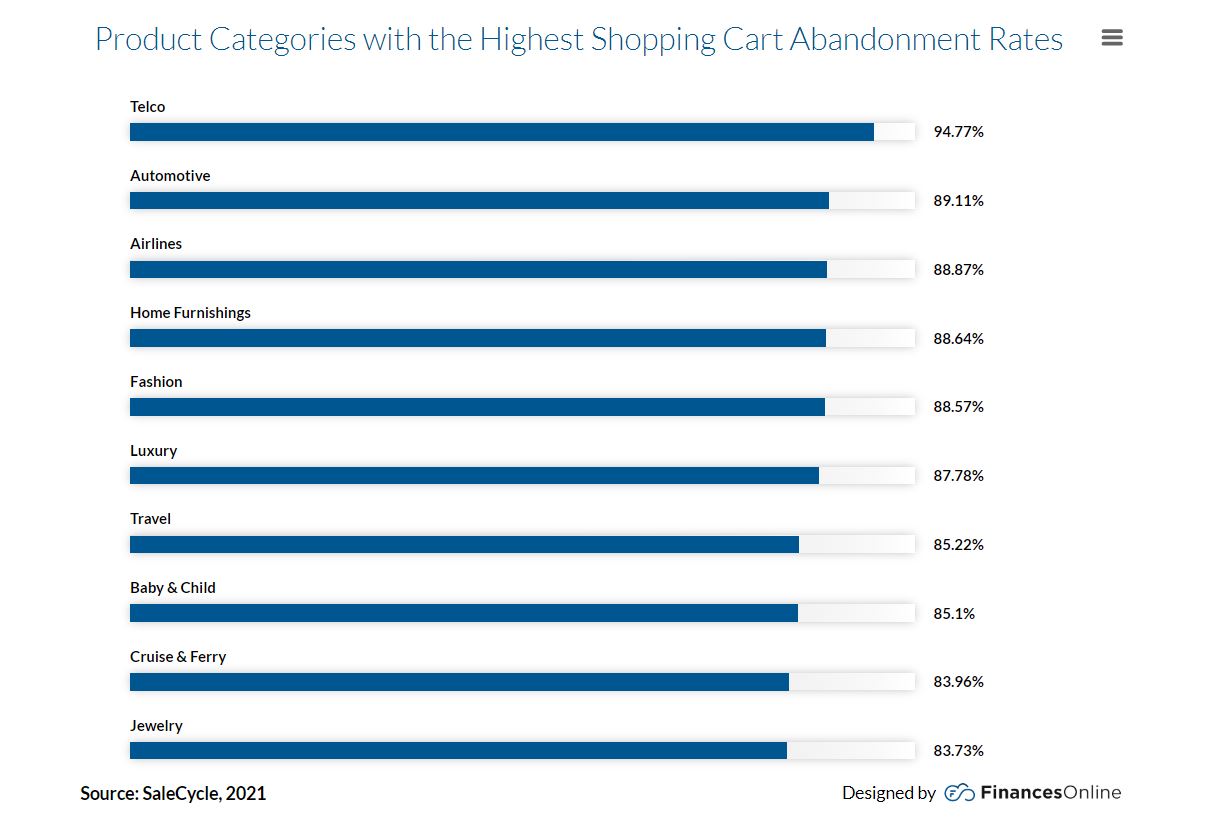
. A high cart abandonment rate in the airline industry: 88.87% in 2021.
. A strong competitive landscape: Over 100 airlines in Europe and a growing number of flight comparison platforms such as Skyscanner and Google Flights.
. An inconsistent pricing display accross platforms: some platforms exclude the ticket fees, others show a per-person price or only show the return ticket rates.
IN-DEPTH USER INTERVIEWS
. 5 Users: 3 from Ireland, 1 from France, 1 from Austria.
. Regularly travelling across Europe
. Have booked a flight online in the past year
OBJECTIVES
. To explore travel habits
. To understand factors influencing purchase decision making
. To gain insights into motivations and context of use of airline booking apps
. To investigate people’s beliefs, thoughts and habits regarding flight booking.
INSIGHTS
. A lot of search and comparison work before booking a flight
. A lack of trust in Airlines leading to cautious behaviours and strategic approaches
“I checked the price several times in 2 or 3 weeks before booking”
- User participant 1
“I removed my internet history before searching and booking my flight”
- User participant 3
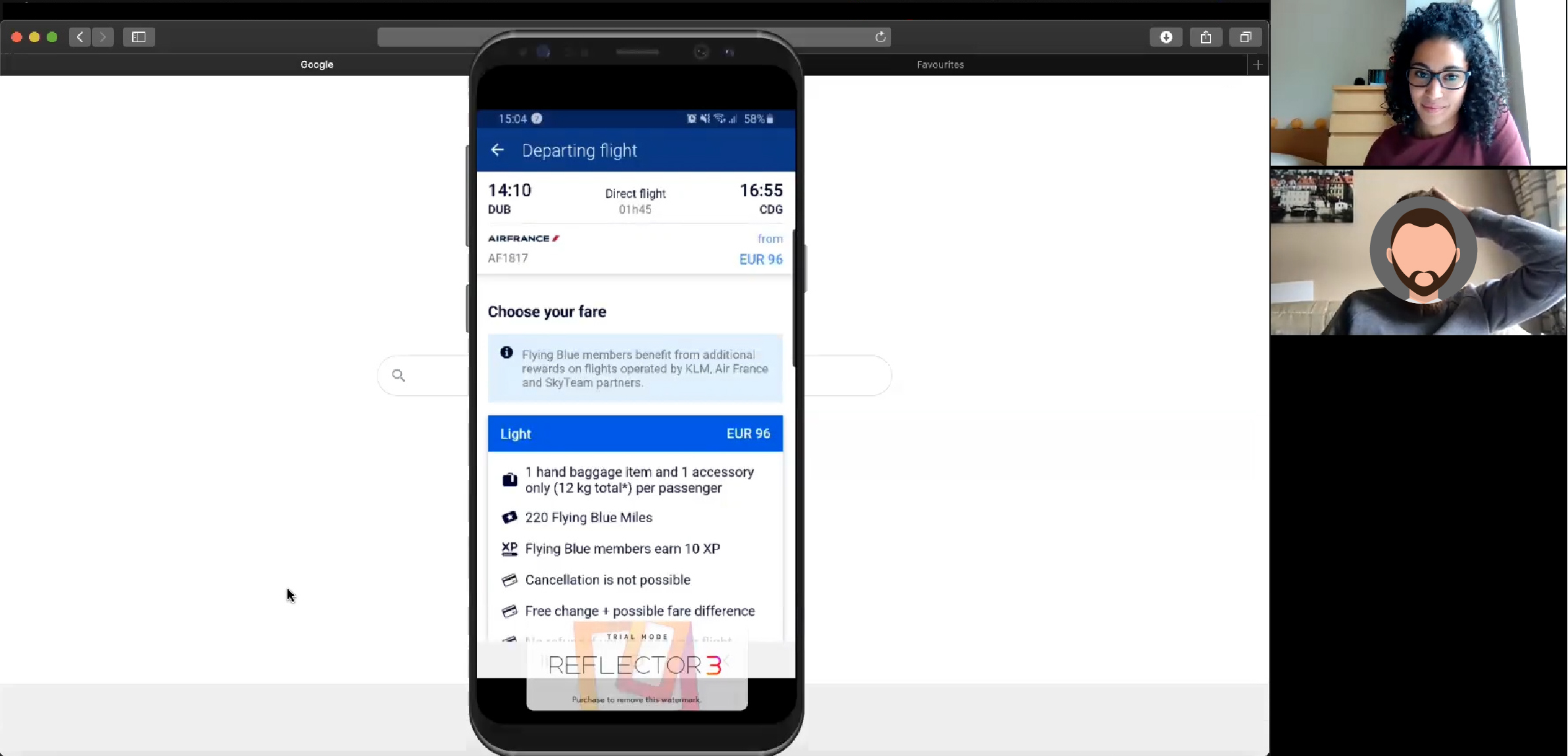
USER TESTINGS
. 3 Users
. Tests on 2 competitors’ apps
. Regularly travelling across Europe
. Have booked a flight online in the past year
OBJECTIVES
. to identify flights search and comparison behaviours
. to understand expectations, needs and goals
. to identify usability issues on airline booking apps
INSIGHTS
. “Is it free?”
People were pursuing pricing information
. “They are trying to sell more stuff that I just don’t need!”
People felt trapped into an upselling process
. People felt overwhelmed and confused by the amount of add-ons and services.
ONLINE SURVEY
OBJECTIVES
. to gain a broader understanding of people’s goals and context of use of Airline booking apps
. to identify usability issues at a larger scale
. to further explore people’s airline booking experiences and habits
INSIGHTS
The reason people visited an airline booking app:
. 45% to check prices
. 31% to book a flights
The problems people encountered:
. N°1 Visibility and clarity of the information
. N°2 Upselling attempts during the process
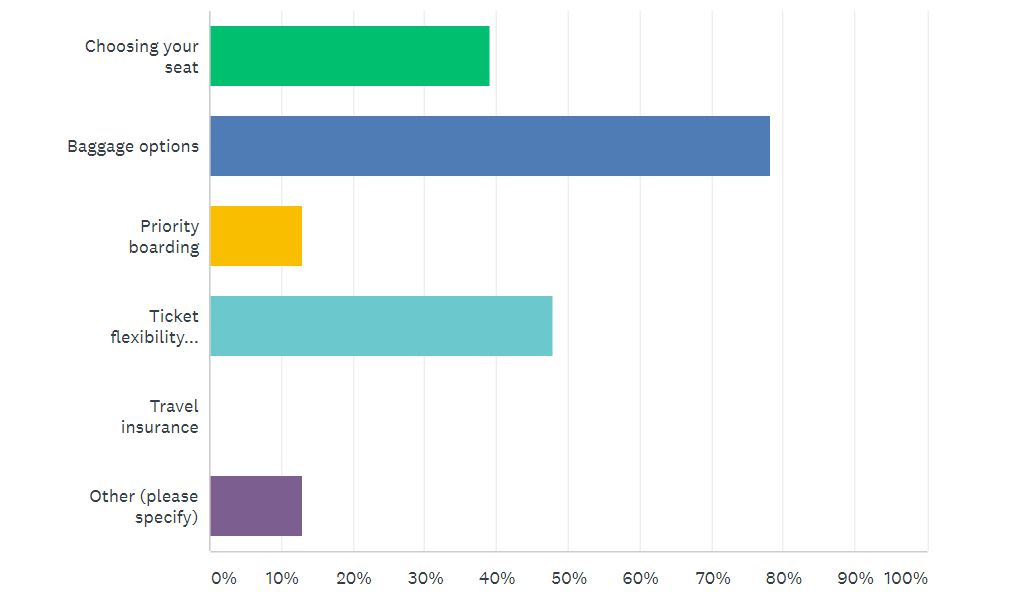
Options people considered when booking:
. 78% baggage options
. 47% ticket cancellation
Research outcomes
Articulating findings and identifying business opportunities
ANALYSIS METHODS
. Affinity diagramm
. “As-is” Customer Journey Map
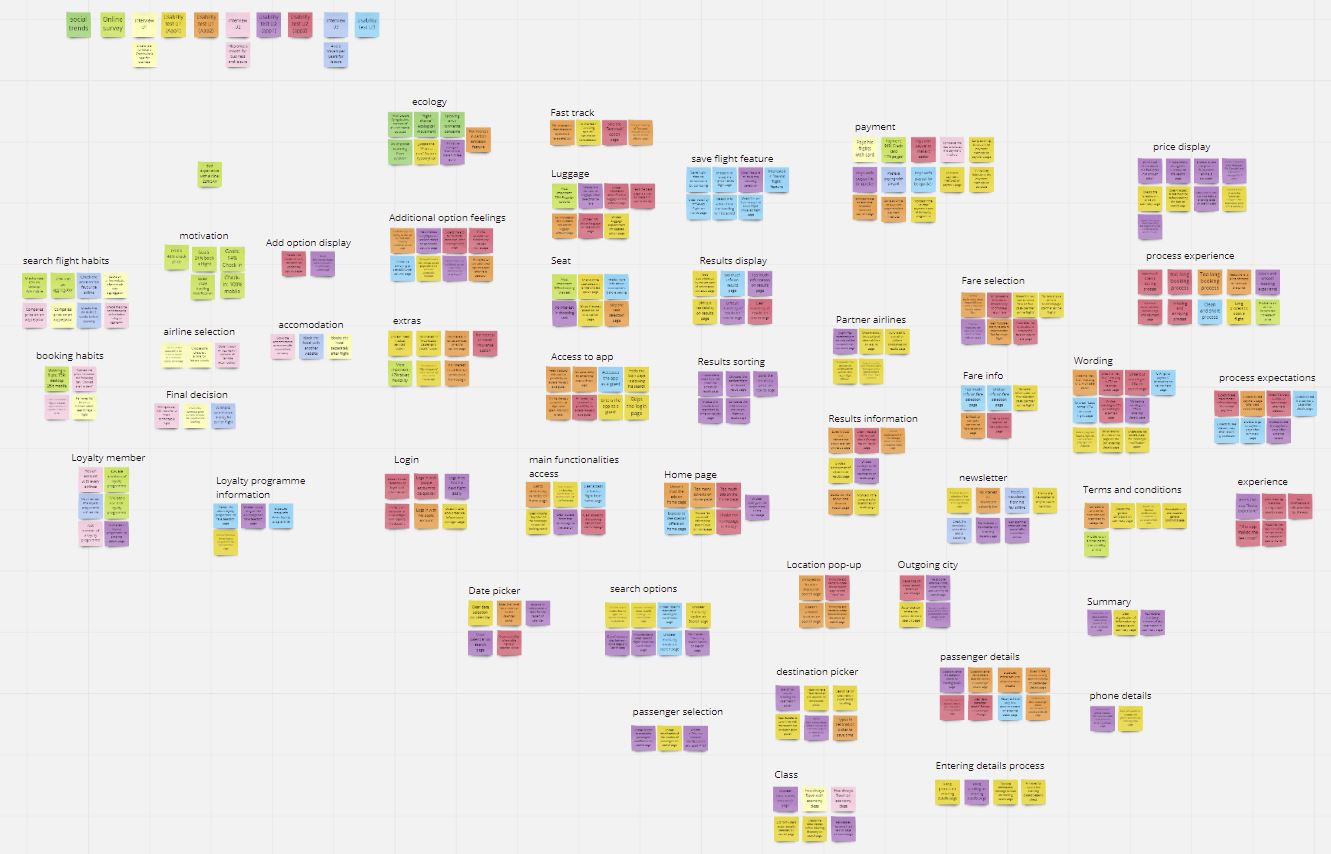
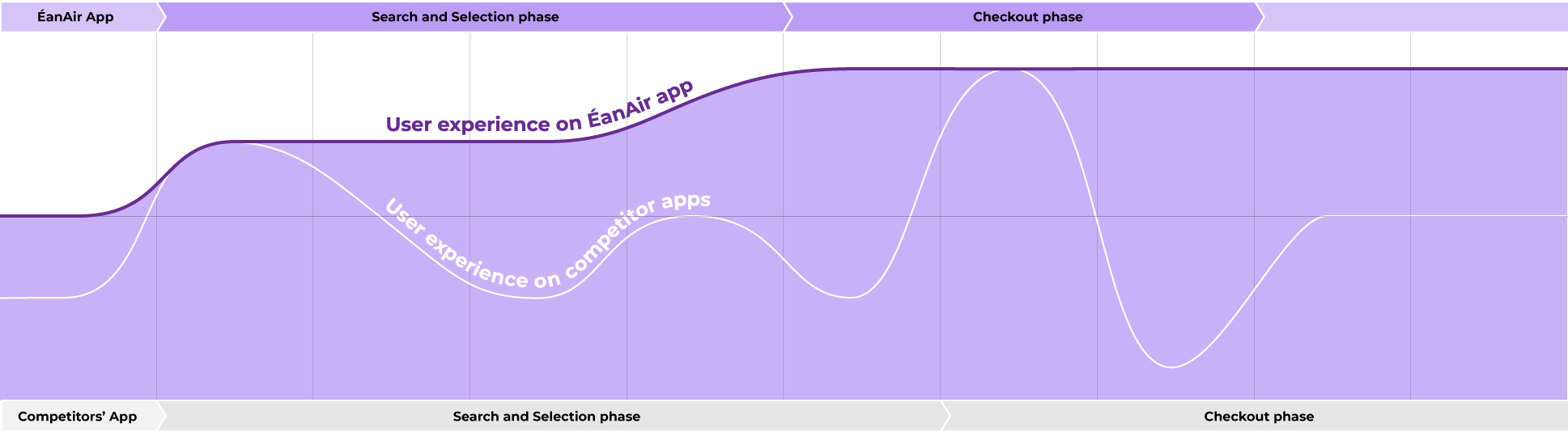
PEOPLE'S EXPERIENCE ON COMPETITORS' AIRLINE BOOKING APPS
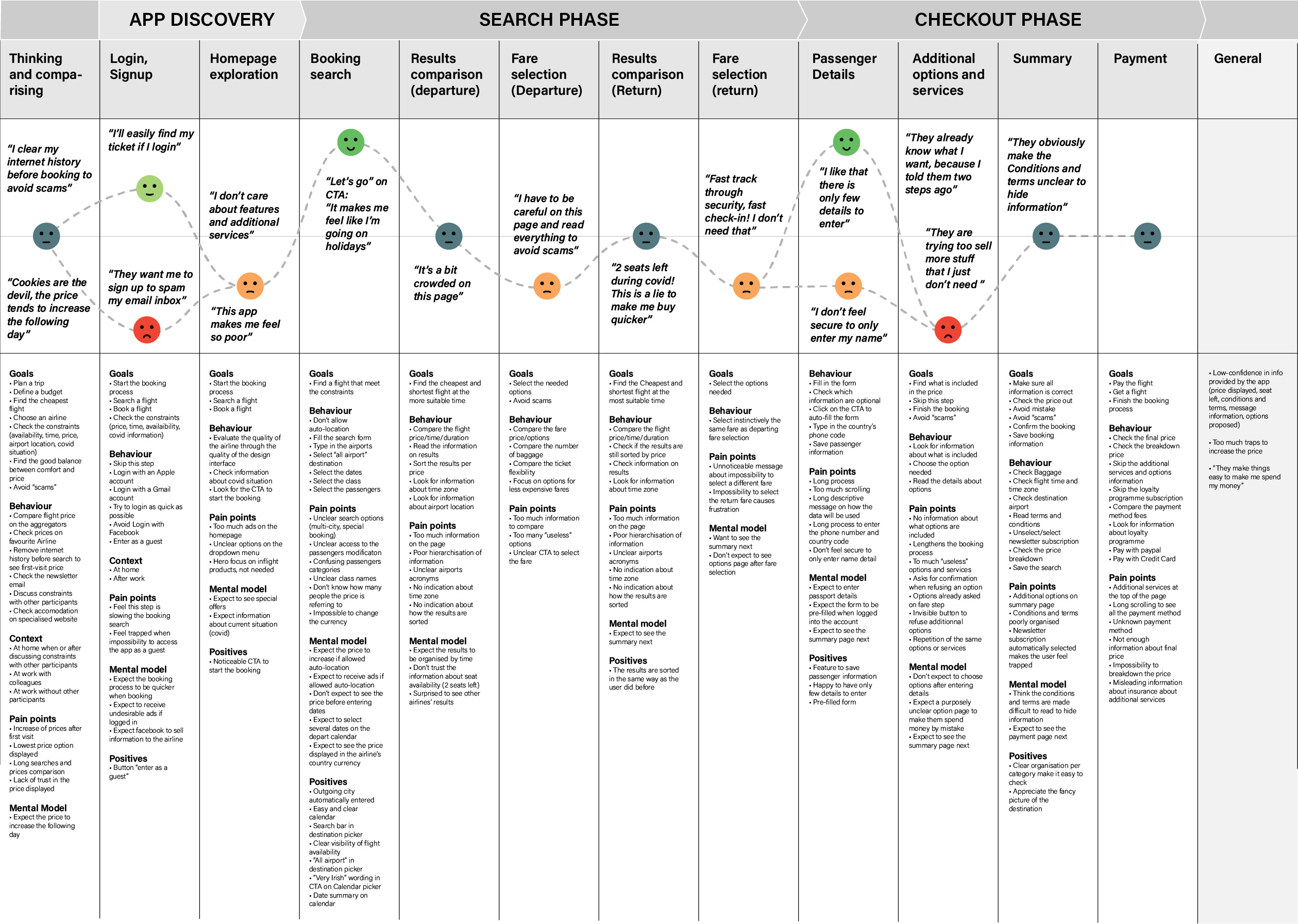
KEY FINDINGS
A SENSE OF STAGNATION AND EXPOSURE TO SALES TACTICS
Airlines offer a lengthy and complex booking process.
People expect the checkout between 2 to 6 steps earlier in the booking process. Additionally, they are interrupted between 1 to 6 times by add-ons pages during the checkout process. This delays people’s ability to make informed purchase decisions.
THE FEELING THAT AIRLINES ARE CONCEALING INFORMATION
People are not provided with sufficient and clear information.
Charges and fees are not consistently displayed upfront and the total price at checkout can be up to +200% higher. This lack of transparency deteriorates people’s trust and confidence in Airlines.
THE OVERWHELMING NUMBER OF FARE OPTIONS AND ADD-ONS
People feel confused by the many available options.
In addition to the fare options, there are many add-ons like choice of seats, fast track, loyalty points and cancellation insurance… Although those add-ons are meant to provide more choices to users, people perceive them as hidden fees and sales attempts.
Identifying Opportunities
Bridging the gap between people’s needs and business strategy
People want to make informed flight booking decisions
THE CONCEPT
PROBLEM 1: A SENSE OF STAGNATION AND EXPOSURE TO SALES TACTICS
Solution: Tailoring the process to meet people’s needs and optimize swift conversions
. Facilitating flight search and selection process by displaying transparent information on time, price, and service included sooner in the process.
. Facilitating purchase decision by allowing the summary review directly after the selection process
. Streamlining the checkout by eliminating obstacles and interruptions
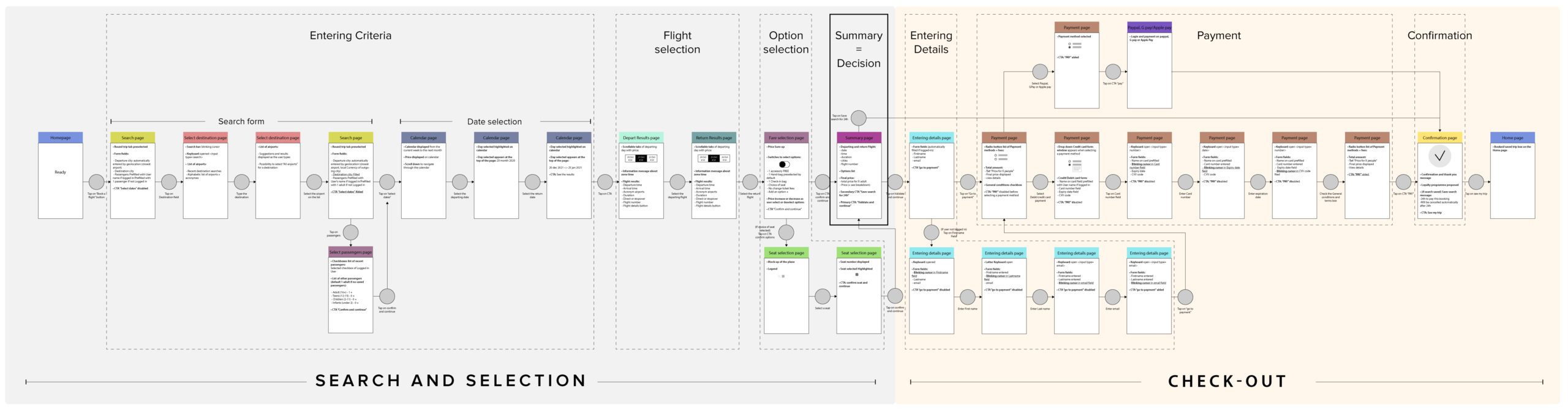
THE CONCEPT
PROBLEM 2: THE FEELING THAT AIRLINES ARE CONCEALING INFORMATION
Solution: Increasing information transparency to enhance informed decision-making
. Displaying pricing information upfront:
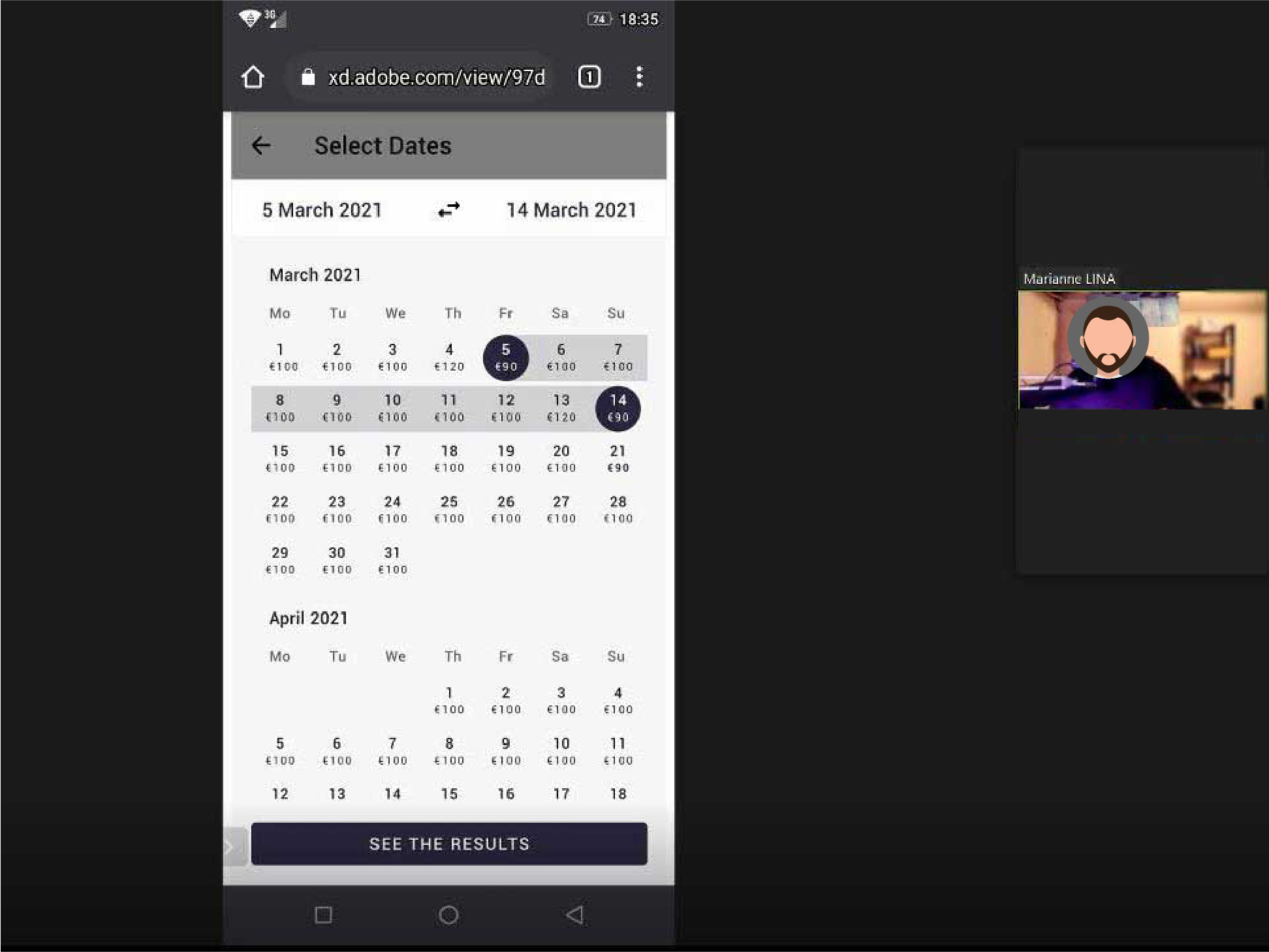
The price is visible from the date selection page to enhance confident selection.
. Notifying change of price by highlighting price fluctuations throughout the process and ensuring awareness of any increases or decreases
. Enhancing checkout review by providing a clear summary page, enabling swift adjustments of the selection, and introducing a “Save Your flight” feature to secure fare prices for 24h.


THE CONCEPT
PROBLEM 3: THE OVERWHELMING NUMBER OF FARE OPTIONS AND ADD-ONS
Solution: Enabling fare customisation to simplify the add-ons selection process and empower users.
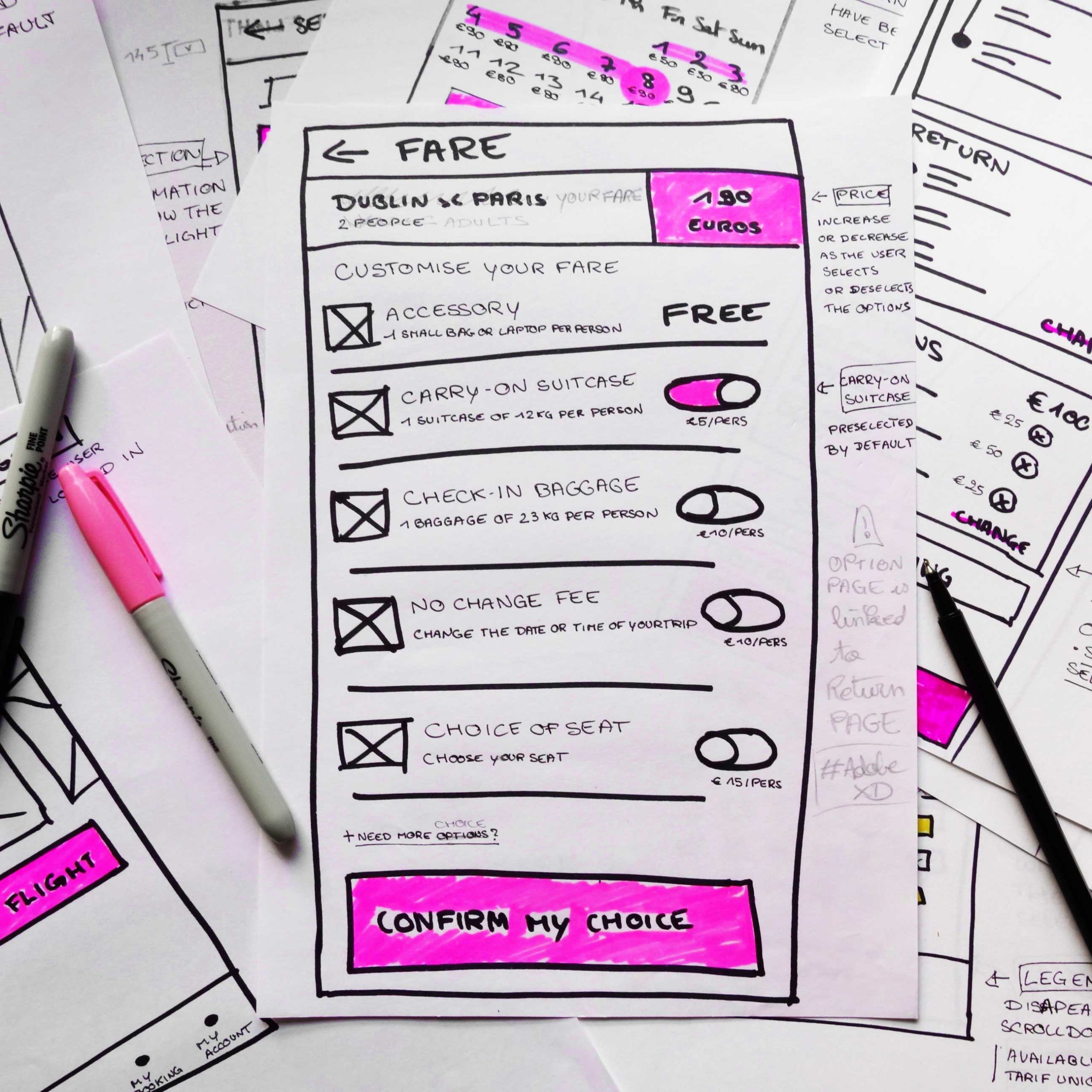
. Simplifying the fare selection by reducing the number of options to what is essential for the users according to the research: luggage, cancellation and choice of seat.
. Speeding up the option/add-ons selection by combining the fare and add-on options into one unique step.
. Empowering people by transforming the fare selection into a customisable service.

Testing the concept
Assessing the impact on trust and conversion
USER TESTINGS ON PROTOTYPE
. 2 user-participants
. Regularly travelling across Europe
. Have booked a flight online in the past year
OBJECTIVES
. to assess the clarity and ease of the booking process
. to identify potential remaining usability issues
. to evaluate the impact on people’s trust and conversions
INSIGHTS AFTER TESTINGS
“I just wanted two seats near one another” – User participant 1
“I don’t know if I’ll be sat with my friends” – User participant 2
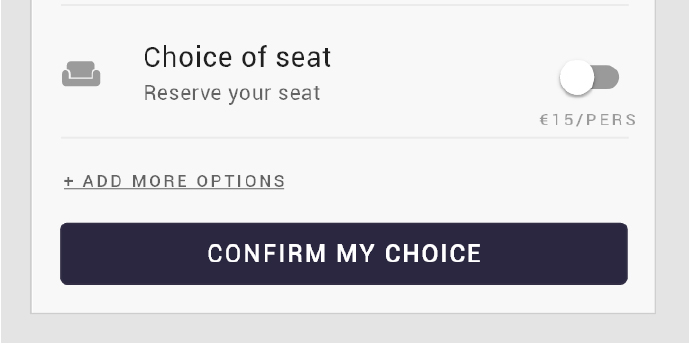
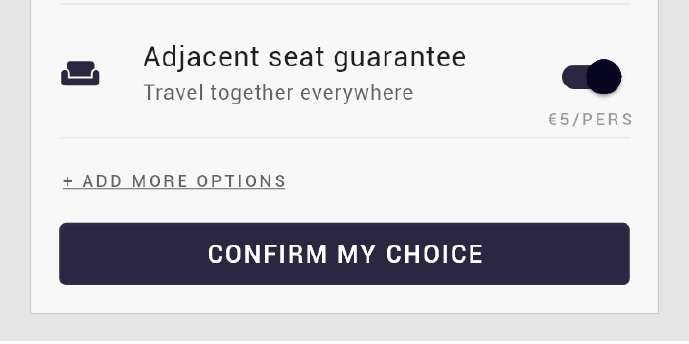
CHOICE OF SEAT CONCERNS
Solution: Replacing the default “choice of seat” option with an “Adjacent seat” option displayed for 2 or more passengers.
INSIGHTS AFTER TESTINGS
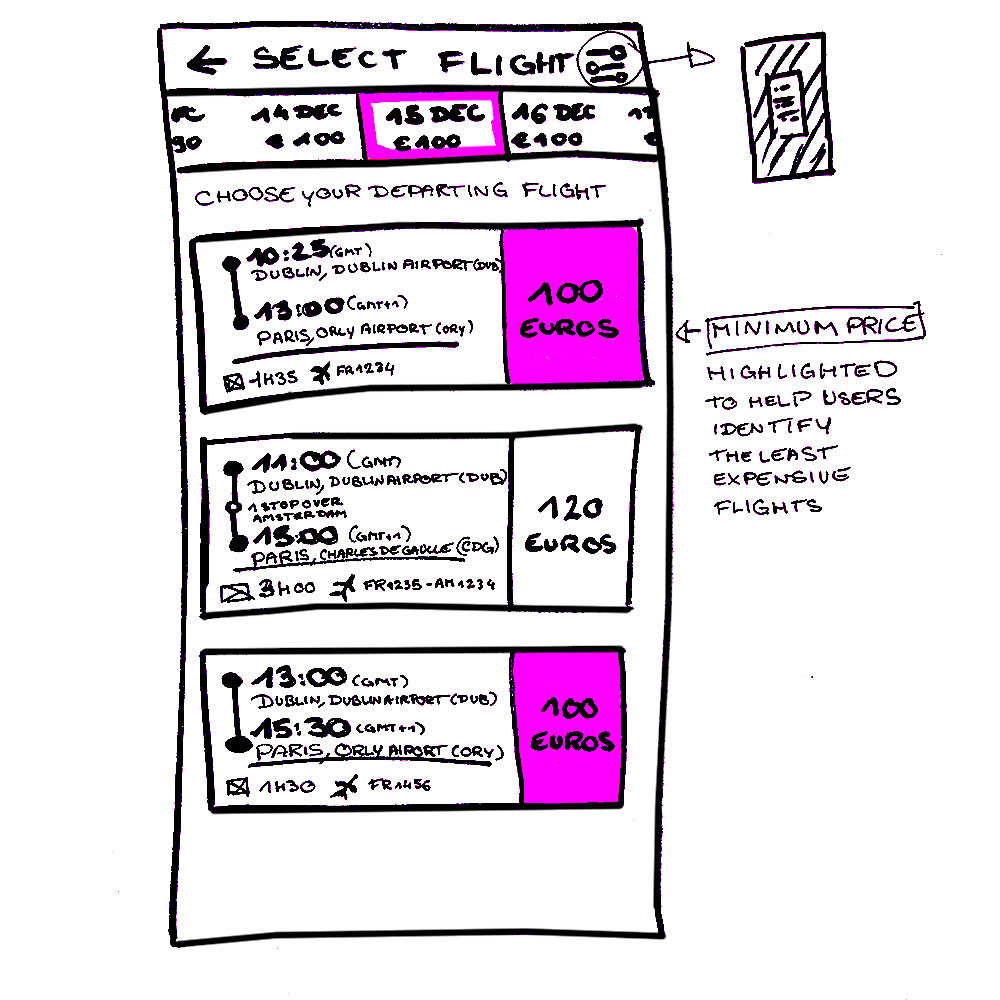
A DIFFICULT FLIGHT COMPARISON
Solution: Simplifying the comparison process by prioritising the visibility of time and price information to streamline the comparison process

OUTCOMES
+ 35%
The add-ons selection process boosted the average ticket spending by 35%
x2
Doubled interest in add-ons and options, increasing the amount spent per ticket.
100% of participants were curious to find out what options they could add, without having previous needs or expectations.
3 mins
A purchase decision making
3 mins quicker on EanAir’s app
than on competitors’ apps, ensuring swift conversions.
Trust
A Noticeable increase in trust
No negative feelings or reactions were observed during the Usability tests.
Participants responded very positively to the possibility of locking the price fare:
“That’s great! [Because] generally, airlines retain your IP address to increase their prices in the following days.”